

Top 10 LED Downlights in India: Best Picks for Homes and Offices in 2026 Choosing the right LED downlights in India can completely transform the look and feel of your home or workplace. Modern LED downlights provide bright illumination, consume less electricity, and last much longer than traditional lighting options. Whether you are renovating your living room, designing a new office, or upgrading commercial interiors, selecting the right LED downlight is essential for better lighting performance and lower energy bills. In 2026, homeowners and businesses are looking for lighting solutions that combine efficiency, durability, and elegant design. With numerous options available, finding the best product can be confusing. This guide covers the top 10 LED downlights in India, important buying factors, and practical tips to help you make an informed decision. Why Choose LED Downlights? LED downlights have become a preferred lighting solution because they offer several advantages over conventional lights. Key Benefits Lower electricity consumption Longer lifespan than traditional bulbs Uniform and glare-free lighting Minimal heat generation Stylish and modern appearance Suitable for homes, offices, hotels, and retail spaces Environment-friendly lighting technology How to Choose the Best LED Downlights in India Before purchasing an LED downlight, consider these important factors: 1. Wattage Select the wattage according to the room size. Smaller rooms usually require 6W–9W, while larger spaces may need 12W–18W downlights. 2. Brightness Compare lumen output instead of just wattage. Higher lumens provide brighter illumination without increasing energy consumption significantly. 3. Colour Temperature Warm White (3000K): Bedrooms and living rooms Natural White (4000K): Dining and common areas Cool White (6500K): Offices, kitchens, and workspaces 4. Build Quality Choose LED downlights made with quality materials and efficient heat management to ensure long-lasting performance. 5. Warranty A reliable warranty reflects the manufacturer’s confidence in product quality. Top 10 LED Downlights in India for 2026 Rank LED Downlight Best For 1 Philips LED Downlight Premium residential lighting 2 Havells LED Downlight Modern homes 3 Wipro Garnet LED Downlight Office interiors 4 Crompton LED Downlight Commercial applications 5 Orient LED Downlight Living rooms 6 Syska LED Downlight Budget-friendly homes 7 Bajaj LED Downlight Daily residential use 8 Panasonic LED Downlight Luxury interiors 9 Surya LED Downlight Retail stores 10 Biocon Electric LED Downlight Homes and office lighting Where Can LED Downlights Be Used? LED downlights are highly versatile and can be installed in various spaces, including: Living rooms Bedrooms Modular kitchens Offices Conference rooms Shopping malls Hotels Hospitals Educational institutions Reception areas Common Mistakes to Avoid Many buyers choose lighting based only on price. Instead, avoid these common mistakes: Buying incorrect wattage Ignoring lumen output Choosing unsuitable colour temperature Purchasing products without warranty Using poor-quality installation accessories Making informed decisions helps improve lighting efficiency and reduces maintenance costs over time. LED Downlights vs Traditional Ceiling Lights Feature LED Downlights Traditional Lights Energy Consumption Low High Lifespan Very Long Short Heat Generation Minimal Higher Maintenance Low Frequent Design Modern Conventional Why LED Downlights Are the Future The demand for LED lighting continues to grow because of increasing energy awareness and rising electricity costs. Modern LED downlights offer excellent brightness while consuming significantly less power, making them suitable for both residential and commercial applications. They also contribute to sustainable living by reducing energy consumption and requiring fewer replacements over time. Conclusion Finding the best LED downlights in India depends on your lighting needs, room size, and preferred brightness. By comparing build quality, energy efficiency, colour temperature, and warranty, you can invest in lighting that delivers long-term value. Whether you are upgrading a home or designing a professional workspace, selecting quality LED downlights ensures better illumination, improved aesthetics, and lower operating costs. For reliable and energy-efficient lighting solutions, Biocon Electric offers LED downlights designed to deliver consistent performance, durability, and modern aesthetics for residential and commercial spaces. FAQs 1. Which LED downlight is best for homes? The ideal LED downlight depends on room size, brightness requirements, and colour temperature. Products with high energy efficiency, durable construction, and reliable warranty are generally the best choice for residential use. 2. How long do LED downlights last? Most quality LED downlights have an average lifespan of 25,000 to 50,000 hours, depending on usage, manufacturing quality, and installation conditions. 3. Which colour temperature is suitable for offices? Cool White (around 6500K) is commonly preferred for offices because it improves visibility, supports concentration, and creates a brighter working environment. 4. Are LED downlights energy efficient? Yes. LED downlights consume significantly less electricity than conventional lighting while providing excellent brightness, helping reduce electricity bills and maintenance expenses. 5. Can LED downlights be installed in false ceilings? Yes. Most recessed LED downlights are specifically designed for false ceilings and provide a clean, modern appearance with uniform lighting distribution.
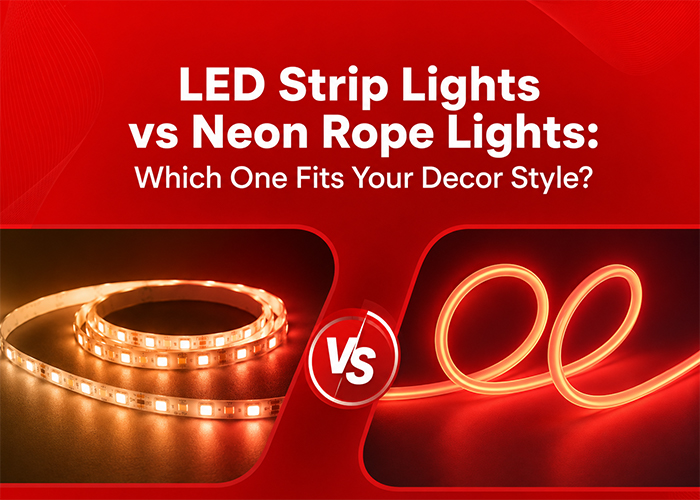
LED Strip Lights vs Neon Rope Lights: Which One Fits Your Décor Style? Lighting has become one of the easiest ways to change the look and feel of a space. Whether you are decorating a home, office, café, or retail store, choosing the right lighting can make a significant difference. Two of the most popular options today are LED Strip Lights and Neon Rope Lights. While both enhance interiors and exteriors, they serve different purposes based on design, brightness, flexibility, and application. If you are planning a lighting upgrade, understanding the differences between these two options will help you make a better decision. This guide compares LED Strip Lights and Neon Rope Lights to help you choose the one that best suits your décor style. LED Strip Lights vs Neon Rope Lights: Quick Comparison Feature LED Strip Lights Neon Rope Lights Appearance Visible LED chips Continuous smooth glow Brightness High brightness Soft and diffused lighting Flexibility Highly flexible Flexible with thicker body Energy Consumption Very low Low Installation Easy with adhesive backing Requires mounting clips Best Use Accent lighting, cabinets, ceilings Signage, outlines, decorative designs Maintenance Easy Low maintenance What Are LED Strip Lights? LED Strip Lights are flexible circuit boards fitted with multiple LED chips. They are available in different colours, brightness levels, and waterproof options. These lights are commonly used for modern interior decoration because they can be installed almost anywhere. Best Applications of LED Strip Lights False ceilings Kitchen cabinets TV units Bedroom headboards Study tables Staircases Office workstations Because of their slim design, LED Strip Lights create clean and modern lighting effects without occupying extra space. What Are Neon Rope Lights? Neon Rope Lights use LEDs enclosed inside a flexible silicone or PVC casing that creates a continuous glow similar to traditional neon lights. Unlike LED Strip Lights, individual LEDs are not visible, making the lighting smoother and more elegant. Best Applications of Neon Rope Lights Outdoor decoration Storefronts Wall art Restaurant interiors Garden pathways Event decoration Architectural outlines These lights are often chosen when aesthetics are more important than brightness. Which Lighting Option Matches Your Décor Style? Choose LED Strip Lights If You Prefer Minimalist interiors Smart home lighting Bright task lighting Hidden lighting effects Energy-efficient everyday use LED Strip Lights blend perfectly with contemporary homes where clean lines and subtle lighting are preferred. Choose Neon Rope Lights If You Prefer Decorative feature walls Artistic interiors Soft ambient lighting Commercial displays Creative signage Neon Rope Lights create a premium visual effect that stands out even from a distance. Energy Efficiency Comparison Both lighting options are energy efficient compared to traditional lighting systems. However, LED Strip Lights generally consume slightly less electricity because of their exposed LED design and efficient heat dissipation. If reducing electricity bills is your priority, LED Strip Lights are often the better choice. Durability and Maintenance Modern LED lighting products are designed for long-term performance. Quality LED Strip Lights can last up to 50,000 hours with proper usage. Neon Rope Lights also offer excellent durability because their protective casing shields the LEDs from dust, moisture, and minor physical damage. Choosing products from a trusted manufacturer ensures better performance and longer service life. Installation Difference LED Strip Lights are usually supplied with self-adhesive backing, making installation quick and convenient. They can also be cut at marked intervals for customized lengths. Neon Rope Lights require mounting clips or channels but provide a more professional and polished appearance once installed. Which One Should You Buy? There is no single winner because the right choice depends on your purpose. If your goal is functional lighting with modern aesthetics, LED Strip Lights are an excellent investment. If you want decorative lighting that creates a smooth, luxurious glow, Neon Rope Lights are the better option. Many homeowners even combine both products—using LED Strip Lights for hidden ambient lighting and Neon Rope Lights for decorative highlights. Conclusion Both LED Strip Lights and Neon Rope Lights offer unique advantages for residential and commercial spaces. Consider factors like brightness, installation, flexibility, energy efficiency, and overall décor style before making a decision. Selecting quality lighting products ensures better performance, improved safety, and long-lasting visual appeal. For reliable lighting solutions that combine quality, durability, and modern design, Biocon Electric offers a wide range of LED lighting products suitable for different residential and commercial applications. FAQs 1. Which is brighter: LED Strip Lights or Neon Rope Lights? LED Strip Lights generally produce higher brightness because the LED chips are directly exposed. Neon Rope Lights provide a softer, continuous glow that is more suitable for decorative and ambient lighting. 2. Can LED Strip Lights be used outdoors? Yes. Waterproof LED Strip Lights with the appropriate IP rating can be installed outdoors for gardens, balconies, pathways, and building exteriors, provided they are installed correctly. 3. Are Neon Rope Lights energy efficient? Yes. Modern Neon Rope Lights use LED technology, making them significantly more energy efficient than traditional glass neon lights while providing similar visual appeal. 4. Which lighting option lasts longer? Both products have long lifespans, often reaching around 50,000 hours. The actual durability depends on product quality, installation, environmental conditions, and regular maintenance. 5. Can I use both LED Strip Lights and Neon Rope Lights together? Absolutely. Many designers combine LED Strip Lights for hidden accent lighting with Neon Rope Lights for decorative features, creating a balanced and visually appealing lighting design.
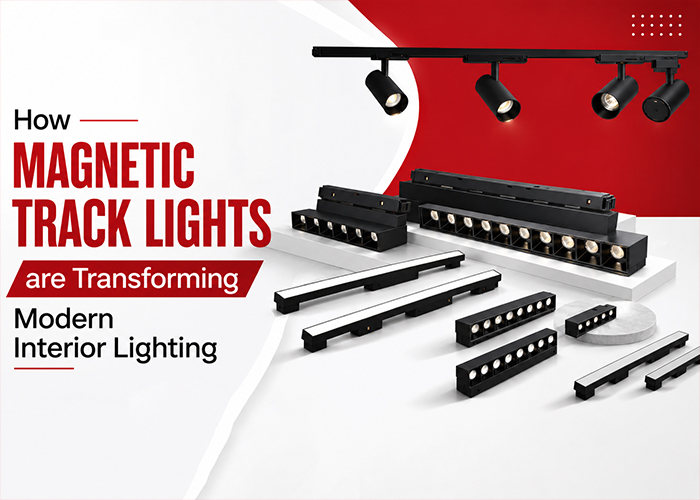
How Magnetic Track Lights Are Transforming Modern Interior Lighting Modern homes and commercial spaces are no longer satisfied with ordinary lighting. Today, people want lighting that is stylish, flexible, energy-efficient, and capable of enhancing the overall interior design. This is where magnetic track lights are making a significant difference. From luxury apartments to offices, retail stores, cafes, and art galleries, these innovative lighting systems have become a preferred choice for architects and interior designers. Unlike traditional lighting fixtures, magnetic track lighting offers greater flexibility because the light fixtures can be moved, replaced, or repositioned without rewiring. This makes it a practical and future-ready lighting solution for changing interiors. If you are planning a renovation or designing a new space, understanding how magnetic track lights work can help you make an informed decision. What Are Magnetic Track Lights? Magnetic track lights are a modern lighting system where light fixtures are attached to a magnetic track instead of being permanently fixed. The track carries low-voltage power, allowing different lighting modules to snap into place securely. Common lighting modules include: Spotlights Linear lights Pendant lights Adjustable floodlights Decorative lighting fixtures Since these fixtures can be repositioned easily, magnetic track systems offer unmatched flexibility for both residential and commercial interiors. Why Magnetic Track Lights Are Becoming Popular The demand for magnetic track lights has increased because they combine functionality with modern aesthetics. They provide clean ceiling lines while allowing users to customize lighting layouts whenever needed. Some major reasons for their popularity include: Minimalist and elegant appearance Flexible lighting arrangement Energy-efficient LED technology Easy maintenance and upgrades Suitable for various interior styles Benefits of Magnetic Track Lighting 1. Flexible Lighting Design One of the biggest advantages of magnetic track lights is flexibility. Fixtures can be moved along the track whenever furniture layouts or room functions change. There is no need for additional electrical work. 2. Modern and Minimal Look Contemporary interiors often focus on simplicity. Magnetic tracks blend neatly into ceilings or walls, creating a clean and uncluttered appearance while highlighting architectural elements. 3. Energy Efficiency Most magnetic track systems use LED technology, which consumes less electricity than conventional lighting. This reduces energy bills while providing bright and consistent illumination. 4. Multiple Lighting Options A single magnetic track can support different types of lighting fixtures. You can combine spotlights for artwork, linear lights for workspaces, and pendant lights for decorative purposes. 5. Easy Installation and Maintenance Replacing or adding fixtures is simple because they attach magnetically. This saves both installation time and maintenance costs compared to traditional lighting systems. Where Can Magnetic Track Lights Be Used? Magnetic track lighting is suitable for various spaces, including: Space Lighting Purpose Living Rooms Ambient and accent lighting Bedrooms Comfortable and adjustable illumination Kitchens Focused task lighting Offices Productive workspace lighting Retail Stores Product and display highlighting Cafes & Restaurants Decorative atmosphere Art Galleries Highlighting artwork and exhibits Choosing the Right Magnetic Track Lighting System Before selecting a magnetic track lighting system, consider these factors: Ceiling Type Ensure the track is compatible with recessed, surface-mounted, or suspended ceiling designs. Lighting Requirements Decide whether you need ambient lighting, task lighting, or accent lighting. Different fixtures serve different purposes. Track Length Choose a track length based on room dimensions and future expansion requirements. LED Quality Select high-quality LED modules with good colour rendering for natural and comfortable lighting. Professional Installation Although installation is relatively straightforward, professional fitting ensures proper alignment, safety, and long-term performance. The Future of Interior Lighting As smart homes and modern architecture continue to evolve, magnetic track lighting is becoming a preferred solution because of its adaptability and sleek appearance. Homeowners appreciate the ability to modify lighting without replacing the entire system, while designers value the creative freedom it offers. With growing emphasis on energy conservation and personalized interiors, magnetic track lights are expected to become even more popular in residential and commercial projects. Conclusion Magnetic track lights have transformed modern interior lighting by offering flexibility, energy efficiency, elegant design, and easy customization. Whether you are renovating a home, designing an office, or planning a retail space, they provide a practical solution that adapts to changing needs without compromising aesthetics. For those looking to explore reliable and high-quality magnetic track lighting solutions, Biocon Electric offers products designed to meet modern lighting requirements while combining functionality with contemporary design. FAQs 1. What are magnetic track lights? Magnetic track lights are modular lighting fixtures that attach magnetically to a powered track, allowing users to reposition or replace lights easily without changing the electrical wiring. 2. Are magnetic track lights energy efficient? Yes. Most magnetic track lighting systems use LED technology, which consumes less electricity, produces less heat, and offers a longer lifespan than traditional lighting options. 3. Can magnetic track lights be used in homes? Absolutely. They are ideal for living rooms, bedrooms, kitchens, dining areas, and home offices because they provide flexible and stylish lighting solutions. 4. Are magnetic track lights suitable for commercial spaces? Yes. Retail stores, offices, hotels, restaurants, galleries, and showrooms commonly use magnetic track lights to create attractive and adaptable lighting layouts. 5. Do magnetic track lights require professional installation? Although some systems are relatively easy to install, professional installation is recommended to ensure proper electrical connections, safe operation, and accurate fixture alignment.
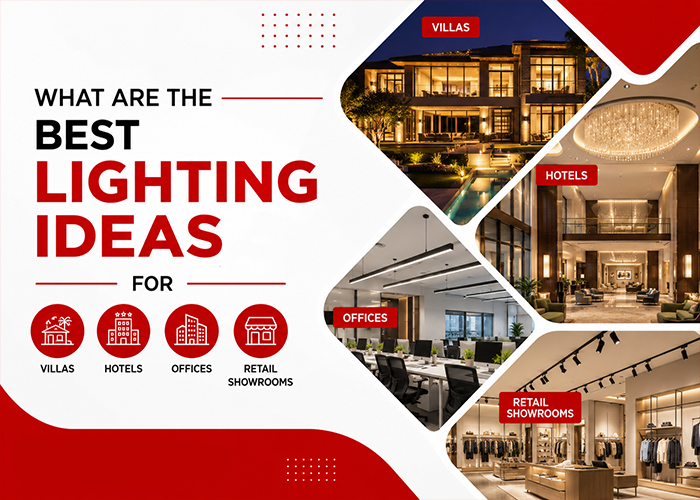
What Are the Best Lighting Ideas for Villas, Hotels, Offices and Retail Showrooms? Lighting is an important part of defining, creating and contributing to aesthetics, atmosphere and performance within a space. Contemporary, bright lighting can transform the atmosphere of a villa, make a hotel more lavish, turn an office into a productive place and make a retail showroom more appealing to its visitors. In today’s age, modern lighting emphasises comfort, energy conservation, and smart design. The correct selection of architectural lighting in various rooms can enhance both their aesthetics and functionality. Plans for Lighting Application in Villas. Decorative lighting and functional lighting are required in a villa. Living rooms and bedrooms often use LED lights for warmer lighting, as they help to create a relaxing and calming atmosphere. Elegant pendant lights overhead in dining spaces, and wall lights near stairs, lend a sophisticated touch without overwhelming the environment. Outdoor Lighting is also essential in villas. Lights for the garden, pathway, and façade enhance safety and illuminate the property’s beauty in the evening. People are increasingly interested in smart lighting systems because they can adjust colour and brightness via their mobile phones. Lighting Ideas for Hotels Layered lighting is essential for hotels to ensure a welcoming experience for their guests. The reception area may have soft ceiling lighting and chandeliers to make a welcoming space. Indirect lighting and adjustable bedside lighting help guests relax in the guest rooms. Indoors, dim lighting is often used to create a high-end ambience in restaurants and hotel lounges. Hotels are generally choosing to use energy-efficient LED lighting as it helps to save electricity and maintenance costs. Energy research indicates that LED lights use almost 75% less energy than conventional incandescent bulbs. Lighting Ideas for Offices Office lighting should support productivity and avoid eye strain. White LED panel lights provide a natural look and balanced brightness, making them a popular choice for workspaces. High-stress lighting in the office can lead to reduced focus and discomfort from long working hours. Adjustable ceiling lights and task-focused desk lights are typical in meeting rooms for presentations. In modern office lighting, energy-saving systems such as motion sensors and daylighting controls are also part of the lighting system. The proper lighting design in offices enhances employee comfort and professionalism. Lighting Ideas for Retail Showrooms Lighting is used in retail showrooms to draw people in and emphasise products. Track and spotlight lighting are popular because they direct light at the areas being displayed. A bright light in a product or product section creates better visibility and customer interest. Various colour temperatures are used depending on the products being exhibited. The warm light is suitable for fashion stores, and the cool white light is appropriate for electronics showrooms. The correct lighting design for villas, hotels, offices, and retail showrooms helps to create attractive, comfortable rooms. In addition, modern lighting offers energy-saving benefits and long-term use. Conclusion Biocon Electric offers cutting-edge architectural lighting solutions tailored for contemporary commercial and residential developments, helping to create functional, energy-efficient, and aesthetically harmonious environments. FAQs Which lighting is best for modern villas? Warm LED lighting, pendant lights, and smart lighting systems are considered ideal for modern villas. They improve comfort, save energy, and create a stylish appearance for both indoor and outdoor spaces. Why is LED lighting preferred in hotels? LED lighting is preferred in hotels because it consumes less electricity, lasts longer, and provides comfortable brightness. It also helps hotels reduce maintenance costs while creating a premium guest experience. What type of lighting works best in offices? Natural white LED panel lights and task lighting work best in offices. They reduce eye strain, improve focus, and create a productive working environment for employees during long office hours. How does lighting improve retail showrooms? Good showroom lighting highlights products, improves visibility, and attracts customer attention. Spotlights and track lighting are commonly used to make products look more appealing and increase customer engagement. What is architectural lighting? Architectural lighting is a lighting design approach that improves the appearance, functionality, and atmosphere of a building. It is commonly used in villas, hotels, offices, and retail spaces for modern interiors.
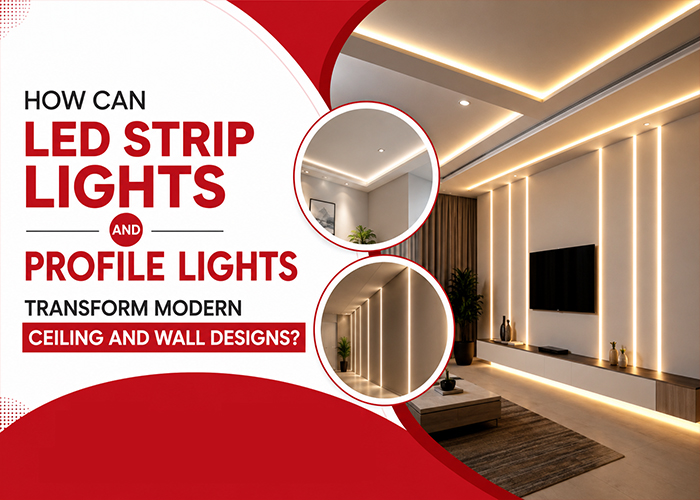
How Can LED Strip Lights and Profile Lights Transform Modern Ceiling and Wall Designs? Conventional ideas of simple ceilings and walls are no longer used in modern house construction. Lighting is a significant factor in creating a stylish and comfortable space today. The most popular are LED strip lights and profile lights, which are transforming interior design. These lights not only brighten the room but also enhance its depth, elegance and contemporary style. Why LED Strip Lights Are Popular in Modern Interiors? LED strip lighting is a flexible lighting solution used for ceilings, wall panels, cabinets, stairs, and furniture edges. They have a compact design that allows them to fit seamlessly into the environment, providing a touch of sophistication and streamlined elegance. LED strip lights use less power and are so long-lasting that many homeowners prefer them to conventional lights. They are also popular for their ability to create soft ambient lighting. LED strip lights are available in warm white and cool white colours, creating cozy living rooms and modern-looking kitchens and offices. There are even advanced LED strip lights with colour-changing options, providing users with greater control over mood lighting. Profile Lights for Ceiling and Wall Designs Profile lights are modern lighting fixtures installed within aluminium profiles. They are commonly used in false ceilings, wall grooves, as decorative panels etc. The lights produce strong lines and stripes that help to make interiors modern and tidy. In modern ceiling designs, profile lights are often used to highlight geometric shapes and layered ceiling structures. They offer even illumination without glare. Profile lights are used to illuminate textures, paintings and decorative panels on walls. This will provide a special, attractive look. Profile lights are also a favourite among interior designers, as they can be made in various lengths and shapes. Profile lights come in a variety of shapes and designs, including straight lines, squares, and curves, and can help create a clean and luxurious look. Energy Efficient Both LED strip lights and profile lights are highly energy efficient. Lighting industry research indicates that LED lighting may be as much as 75% more energy-efficient than traditional incandescent light bulbs. They are also cooler to use inside for extended periods of time. The other advantage is that it is easy to maintain. These lights last a long time, which means the homeowner will spend less on replacements and repairs. They are durable and have a modern look, making them a good option for interiors of both homes and offices. Conclusion The modern ceiling and wall design has been completely transformed by incorporating LED strip and profile lights, which are more elegant, functional, and energy-efficient. They are useful for creating beautiful rooms and can also enhance lighting in a home or office. Biocon Electric is a trusted name in providing quality lighting solutions and advanced electrical products, offering a range of innovative lighting options suitable for modern living spaces. FAQs What are LED strip lights mainly used for? LED strip lights are commonly used for ceiling lighting, wall decoration, cabinet lighting, and furniture highlighting. They create soft ambient lighting and improve the overall appearance of modern interiors while using less electricity. Why are profile lights preferred in modern homes? Profile lights are preferred because they provide clean linear lighting and enhance modern ceiling and wall designs. They also reduce glare and create a sleek and luxurious appearance in living spaces. Are LED strip lights energy efficient? Yes, LED strip lights consume much less electricity compared to traditional bulbs. They are designed to save energy, produce less heat, and offer a longer lifespan, making them cost-effective for daily use. Can profile lights be installed on walls? Yes, profile lights can be installed on walls to highlight textures, artwork, and decorative panels. They help create modern, attractive wall designs with balanced, comfortable lighting. Do LED strip lights require high maintenance? No, LED strip lights require very little maintenance because they are durable and long-lasting. Their strong performance and low energy consumption make them suitable for long-term residential and commercial use.
How to Reduce Electricity Bills with LED Lights and Energy-Efficient Wiring The increasing power rates are a worry to households and companies. The good news is that even minimal modifications, such as replacing the lighting with LED lights and enhancing the wiring systems, can make a difference. Not only do these solutions reduce energy use, but they also enhance safety and long-term savings. Why are LED lights such a big difference? One of the simplest ways to save on electricity bills is to use LED lights. LEDs consume up to 80 per cent less energy than traditional incandescent bulbs. They are also very durable- most of them last up to 25,000 or more years, so you also save on replacement expenses. The other benefit is that LED lamps generate minimal heat. It will reduce energy wastage, and rooms will also remain cooler, particularly during the summer. Regardless of whether it is for indoor or outdoor lighting, converting to LED lights is a good and wise move. The purpose of Energy-Saving Wiring. While the focus is primarily on lighting, wiring is equally important for energy efficiency. Old or faulty wiring may cause energy loss, voltage drop, and even hazards. With energy-efficient wiring, the flow of electricity will be smooth, with minimal waste. Newer wiring systems are made to accommodate the electrical loads more efficiently and have lower resistance. It helps appliances operate more effectively and prevents overheating. Good-quality wiring and installation methods can help a lot in reducing power consumption in the long run. Better Together: Savings Maximally. LED lights are beneficial when used individually; however, when combined with efficient wiring, the results are most effective. When electricity flows in the appropriate direction through a well-planned system, LEDs operate at maximum efficiency. This mixture can reduce the total amount of electricity consumed. Indicatively, research indicates that houses equipped with LED lights and refurbished wiring systems can achieve savings of 30-40 per cent on electricity bills. It is a considerable sum in a year. More Electricity Bill-Saving Hints. Other than lighting and wiring, simple habits can help, too: Switch lights and appliances off. Use appliances with good ratings and use less energy. Avoid overloading circuits Have periodic electrical maintenance. These minor measures, along with appropriate infrastructure, can achieve long-term savings without compromising comfort. Conclusion It does not necessarily mean that big changes are necessary to reduce electricity bills. Major improvements, such as replacing lights with LEDs and enhancing the wiring system, can have a powerful effect. They not only save money but also help create a safer, more energy-efficient environment. With reliable, effective electrical solutions, Biocon Electric targets customers seeking cost-effective systems that help save energy without compromising system quality and safety.
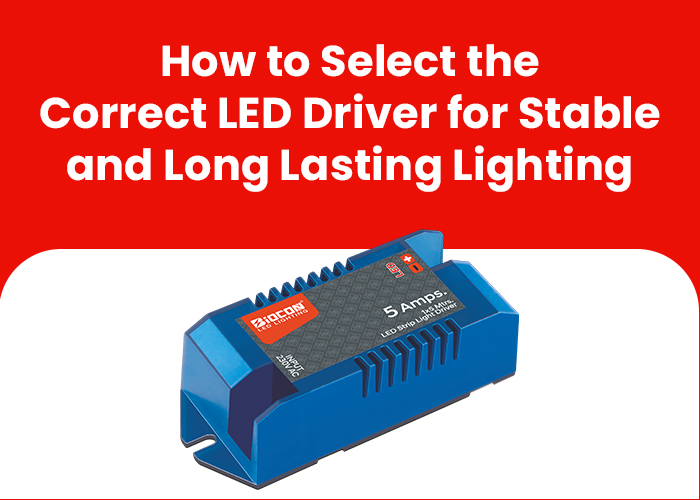
How to Select the Correct LED Driver for Stable and Long-Lasting Lighting Selecting the appropriate LED driver is as important as selecting the LED light. A competent driver guarantees stable performance, a longer life cycle, and improved energy efficiency. Even the finest LED lights may flicker, overheat or fail prematurely if the driver is not paired correctly. What is an LED Driver? An LED driver is a device that controls the power delivered to an LED. Unlike conventional bulbs, LEDs require constant current or constant voltage to operate efficiently. The driver controls this flow and safeguards the light against damage caused by power fluctuations. Constant Current vs Constant Voltage. The initial thing to do is to determine what kind of LED driver you require. Constant Current Drivers provide a constant current and vary the voltage. They are typically used in high-powered LED applications such as streetlights and industrial lighting. Constant Voltage Drivers are a fixed voltage, often 12V or 24V, and they are utilised in LED strips and decorative lighting. Selecting the wrong type may reduce efficiency and break the LEDs. Check Power Requirements Always adjust the driver’s output power to the LED’s demand. Assuming your LED requires 30 watts, choose a driver that is a bit higher, say 35-40 watts. It will avoid overloading and enhance durability. Lighting experts said that when a driver is operated at approximately 80-90 per cent of its rated load, it greatly enhances its lifespan. Examine Efficiency and Power Factor. The LED driver is highly efficient and dissipates less heat; thus, it delivers better performance and reduces electricity bills. In addition, verify the power factor – a higher factor value is a sign of efficient power use and reduced burdens on the electrical system. Consider Dimming Compatibility If you need adjustable brightness, make sure the driver supports dimming. Not every LED driver is dimmable, and an unsuitable one may produce flickering or patchy light. Check Protection Features An LED driver must also have safety features such as: Over-voltage protection Short-circuit protection Thermal protection These characteristics help prevent damage and ensure safe operation, particularly in locations with an unstable power supply. Assess Environment and Installation. Take note of the location of the LED driver. In outdoor or industrial environments, it is preferable to use a driver with an appropriate IP rating to resist dust and moisture. In addition, it should fit in well within your installation area. Conclusion The choice of an LED driver plays a crucial role in establishing stable, efficient, and long-lasting lighting. You can prevent most problems and achieve maximum performance out of your lighting system by learning about the type, power requirements, efficiency, and safety features. For individuals seeking reliable lighting systems, collaborating with professionals such as Biocon Electric ensures access to high-quality components and practical advice for improved lighting performance.
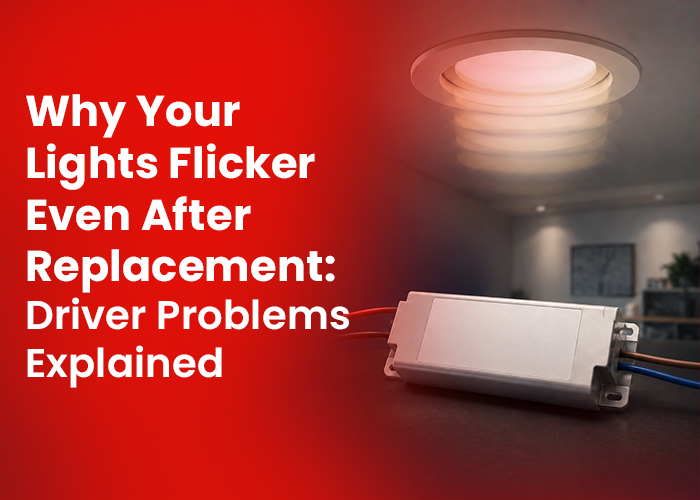
Why Your Lights Flicker Even After Replacement: Driver Problems Explained The first thing you should do when you observe flickering is to replace a light. What, however, happens when the problem persists despite the installation of a new bulb or a new set of fixtures? In most situations, the problem is not the light, but the one driving it. What Is a Driver in Lighting? A driver is a small electronic device that controls the power to your light, particularly LED systems. Compared with traditional bulbs, LEDs require a steady, regulated power supply. The incoming current is converted by the driver into a steady output, ensuring the light operates smoothly. Why Flickering Still Occurs When Changed. When your lights flicker after changing, it is most likely the driver who is causing it. The following are some of the usual causes: Faulty LED Driver Even a newly made light may flicker if the driver is faulty. Unstable power output can cause flickering due to manufacturing defects or low-quality components. Driver and Light are incompatible. Not every driver is at work with every light. Unless the driver is rated for the LED’s required wattage or voltage, the light can flicker or not work properly. Voltage Fluctuations An unstable voltage supply from your electrical system may affect the driver’s operation. The driver is unable to maintain a steady output when the input power continues to vary, resulting in flickering. Overheating Issues Drivers produce heat, and unless properly ventilated, drivers may overheat. Heat stress reduces efficiency and may cause unstable lighting. Dimming Compatibility Problems If you are operating a dimmer switch, the driver should be able to match it. Flickering or buzzing can be caused by non-dimmable drivers hooked up to dimmers. What to do to solve the issue? To prevent flickering due to a driver problem, you should not consider replacing the bulb: Make sure that the driver fits the requirements of your LED light. Make sure that you have a stable voltage supply in your wiring. Use quality drivers rather than low-cost drivers. Check compatibility with dimmer switches, where applicable. Ensure adequate ventilation around the lighting fixtures to prevent overheating. Should You Replace the Driver? In case of flickering despite verified wiring and compatibility, a driver replacement is often the optimal solution. This problem is rather widespread in most LED systems, in which the driver lives shorter than the light. Final Thoughts Flickering lights are not only a nuisance but also usually an indication of an electrical problem. Knowing the role of drivers will enable you to identify the actual cause and rectify it successfully, rather than always replacing the bulbs. To ensure your lighting system is stable, safe, and long-lasting, you can partner with experienced providers such as Biocon Electric.
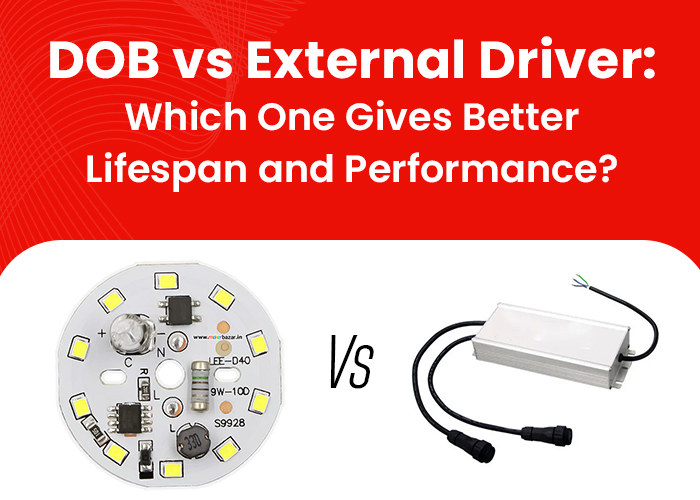
DOB vs External Driver: Which One Gives Better Lifespan and Performance? A popular question when selecting LED lighting is the DOB (Driver on Board) system or external drive set-up – which has the better long life? They are both common technologies, and the difference between them lies in design, efficiency, and durability. Knowledge of these differences helps make the correct choice of lighting solutions for homes, offices, or industry. What is DOB Technology? DOB is an abbreviation that means Driver on Board. The driver circuit is simply placed on the LED PCB (Printed Circuit Board) in this system. It eliminates the use of an external driver. DOB lighting can be cheaper and simpler to install due to its smaller size. It also minimises the number of components, thereby reducing production start-up costs. Nonetheless, the driver is more susceptible to heat and voltage fluctuations since it is mounted on the same board as the LED chips. What is an External Driver? An external driver is another unit that is attached to the LED light. It controls the power consumption and provides constant operation. This configuration offers improved heat management because the driver is physically isolated from the LED chip. External drivers tend to be constructed with superior-quality components, so they are more dependable in harsh environments. Lifespan Comparison One of the most significant characteristics of lighting is Lifespan. DOB systems have a shorter life span than external driver LEDs. It is primarily because of heat accumulation. The LED and the driver are on the same board, so excess heat will reduce efficiency and damage components over time. External driver LEDs, in their turn, are more long-lived. Effective heat cooling and constant-power control are used to maintain uniform performance. These systems, in most cases, can last 25,000 to 50,000 minutes or more, depending on usage conditions. Performance and Efficiency External driver LEDs tend to be more stable in terms of performance. They are more efficient at handling voltage oscillations, which is vital in places with an uneven power supply. DOB lights will continue to work well under controlled conditions, but will flicker or degrade more quickly under unstable conditions. Efficiency can also decrease over time due to thermal stress. Maintenance and Replacement Another important difference is maintenance. When a DOB light goes dead, the whole unit can frequently be replaced. It may add to long-term expenses. External drivers can be easily replaced by the driver or LED module, thereby simplifying the repair process and reducing costs. Which of the Above Should You Select? DOB lighting may be a convenient choice if you need an inexpensive, space-saving solution, but it must be used within a certain period or for the most basic tasks. But when it comes to long-term use, higher durability, and predictable performance, then external driver LEDs are usually the better option. Conclusion The two technologies compare in terms of their locations, and when external drivers are present, they are clearly better in terms of lifespan, efficiency, and reliability. In applications where long-term performance is important, it is usually more advantageous to invest in an external driver system. For individuals who want reliable lighting solutions designed with long-term performance in mind, Biocon Electric specialises in providing products that are well-balanced in terms of efficiency, durability and usability in real-world environments.
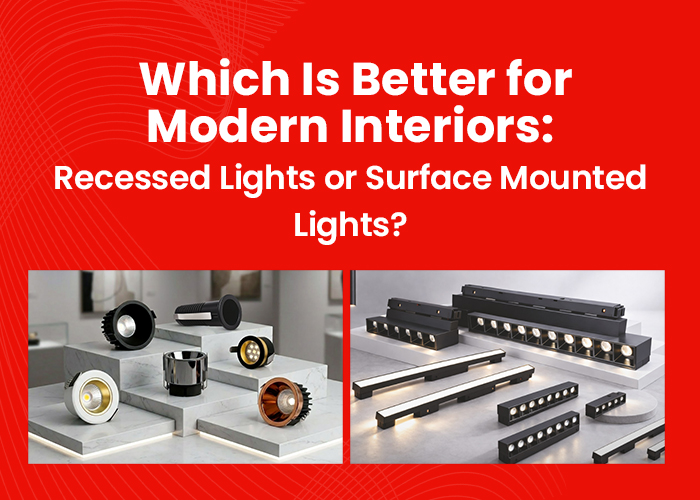
Which Is Better for Modern Interiors: Recessed Lights or Surface-Mounted Lights? Lighting is one of the most important factors in creating contemporary interior designs. Whether it’s an apartment or office space, people seek lighting that enhances comfort and design. Many homeowners are confused about how recessed lights and surface-mounted lights differ and which is better suited for their home. This will depend on ceiling height, room style, maintenance requirements and the overall lighting objectives. Understanding Recessed Lights Recessed lights are installed in the ceiling for a clean, minimal appearance. They are also used in contemporary interior design because they do not dangle below the ceiling. Recessed lights are popular for living rooms, kitchens, hallways, and offices where a streamlined look is desired. The benefit of a recessed light is that it can help to enlarge small rooms. The fixtures remain concealed in the ceiling, creating a sense of openness and simplicity. They also diffused the light uniformly throughout the room. Research in interior lighting design indicates that uniform lighting improves visual comfort and reduces eye strain. However, recessed lighting installation typically requires cutting the ceiling and wiring in the area. They are used best in a false ceiling or in newly built houses. Maintenance may also be more labour-intensive as the fittings are installed in the ceiling. Why Surface-Mounted Lights are Popular? Surface-mounted lights are lights attached to the surface of the ceiling or wall. They are easier to install and are frequently seen in houses with shallow ceilings. In contrast to recessed light fixtures, ceiling-mounted lights do not require much clearance in the ceiling. One more advantage of the lights installed on the surface is their adaptability. They come in various shapes, finishes, and sizes, making them suitable for decorative interiors. Surface-mounted lights are easy to replace and maintain, making them a popular option for a variety of spaces, such as bedrooms, balconies, utility rooms, and rental properties LED surface-mounted lights are also energy-efficient. LED fixtures are estimated to use much less electricity than conventional lighting systems and to have a much longer lifespan, according to global lighting reports. Which Option is the best for contemporary interiors? The recessed lights are typically the best choice for minimalist homes. They seamlessly integrate with contemporary ceilings, giving them a chic appearance. However, surface-mounted lights are functional, fashionable, and conveniently accessible in areas without false ceilings. Today, interior designers are incorporating both recessed and surface-mounted lighting fixtures into their designs for a blend of form and function. Recessed lighting is typically used for ambient lighting, while surface-mounted lighting is used for decorative or accent lighting. Conclusion The better option depends upon the room structure, the ceiling structure, and the lighting purpose. When carefully chosen, either type of lighting can enhance modern interiors. Biocon Electric offers valuable tips on the latest trends in interior and modern lighting solutions, helping people make informed choices about the lighting they install in their homes or offices. FAQs Are recessed lights better for small rooms? Yes, recessed lights help small rooms look bigger because the fixtures stay hidden inside the ceiling. They create a neat appearance and provide even lighting without making the ceiling feel crowded or heavy. Do surface-mounted lights consume more electricity? Modern surface-mounted LED lights are energy-efficient and typically consume less power than older traditional fixtures. Their electricity usage mainly depends on wattage, brightness level, and the type of LED technology used. Which lights are easier to install? Surface-mounted lights are easier and faster to install because they do not require deep ceiling cutting. They are suitable for homes with concrete ceilings or for spaces where installing a false ceiling is not possible. Can recessed lights be used in every room? Recessed lights can work in most rooms, but they are best suited for spaces with false ceilings or enough ceiling depth. Proper spacing and placement are important for balanced and comfortable lighting. Are surface-mounted lights good for modern interiors? Yes, modern surface-mounted lights come in stylish, minimalist designs that suit contemporary interiors. They are widely used in bedrooms, kitchens, offices, and utility spaces because of their flexibility and easy maintenance.